Spring Flower Name Craft: A Blooming Learning Adventure
Spring is a season of renewal and vibrant color, making it the perfect backdrop for engaging, hands-on learning. The Spring Flower Name Craft & Color Activity captures this essence beautifully, offering a resource that blends artistic expression with foundational literacy skills. For educators, parents, and activity coordinators, this isn't just a simple craft—it's a structured yet flexible tool designed to foster creativity, fine motor development, and a genuine love for words in young learners. Let's dig into what makes this activity pack a valuable addition to your educational toolkit.
An Immersive Blend of Art and Literacy
At its core, this activity is about connection—connecting the visual delight of spring flowers with the personal milestone of learning to spell one's name and other key vocabulary. The visual style is cheerful and inviting, using clean lines and bold shapes that are easy for small hands to cut and manipulate. The personality is playful yet purposeful; every element serves a dual function of creative engagement and skill reinforcement. The overall appeal lies in its ability to make learning feel like play. Instead of abstract letter drills, students are building something tangible and beautiful, which significantly boosts engagement and information retention.
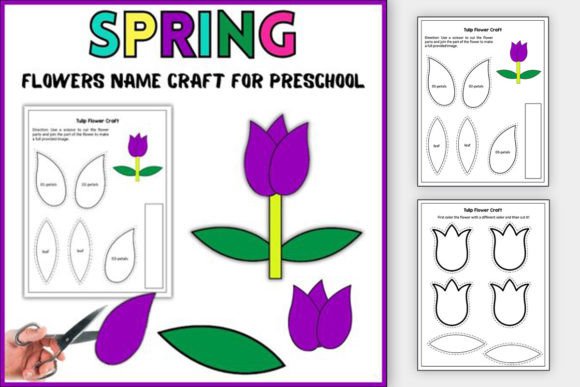
The included activities are thoughtfully sequenced. The Tulip Flower Craft serves as a warm-up, allowing children to explore color and design. The Flower Name Craft is the core literacy component, turning spelling into a puzzle of assembly. Finally, the Flower Name Garden extends the activity into a narrative and display exercise, encouraging storytelling and pride in one's work. This progression mirrors a solid pedagogical approach: introduce, practice, and apply.
Where This Activity Shines: Practical Applications
While designed for preschool and kindergarten, the utility of a well-structured craft activity like this extends across various settings. Its real-world value is in its adaptability and the foundational skills it builds, which are crucial for later creative and professional endeavors.
In Classroom and Homeschool Settings: This is the primary environment. Teachers can use it for a spring-themed literacy center, a whole-group lesson, or as a fine motor skills station. The tangible output—a garden of personalized flowers—makes for a fantastic, student-created bulletin board display that showcases individual achievement and collective effort.
For Therapy and Skill Development: Occupational therapists and special education instructors can find immense value here. The cutting, gluing, and arranging tasks are excellent for developing hand-eye coordination, bilateral coordination, and scissor skills. The name-spelling component also supports letter recognition and sequencing in a low-pressure, high-reward context.
Community and Event Programming: Libraries, community centers, and after-school programs can use this as a standalone spring workshop. It's a self-contained activity that requires minimal prep and yields delightful results, making it perfect for drop-in sessions or seasonal events.
A Gateway to Branding and Design Thinking: While the activity itself is for children, the principles it teaches are foundational. Choosing colors for a tulip is an early lesson in brand identity. Arranging letters to form a word is an introduction to typography and layout. For the adults facilitating the activity—be they designers, marketers, or content creators—it’s a reminder that the most engaging design assets often come from simple, well-structured concepts. This activity is, in essence, a creative font made physical: each flower letter is a glyph, and the garden is the final typeset page.
Maximizing Impact: Guidance for Facilitators
To get the most out of the Spring Flower Name Craft & Color Activity, a little thoughtful implementation goes a long way. Here’s practical advice based on how children learn best and how creators can think about resources.
Choose the Right Moment: Introduce this activity when students are already exploring spring themes, plants, or letters. Context enhances engagement. Pairing it with a story about gardens or a nature walk to look at real flowers can deepen the experience.
Evaluate Your Project Fit: Consider your group's developmental stage. For very young preschoolers, you might pre-cut the flower shapes and focus on the gluing and coloring. For kindergarteners ready for a challenge, the full cutting and spelling process is ideal. The activity is a premium font in the sense that it's a high-quality, versatile resource—don't be afraid to adapt it to your needs.
Test and Extend the Pairings: Think of the core activity as a display font—bold and attention-grabbing. You can create a richer experience by pairing it with complementary "font" activities. Follow up with a script font activity like cursive tracing of flower names, or a sans serif font activity using block letters for labels. This builds a more comprehensive understanding of how different styles serve different purposes, much like in editorial design or web design.
Review the Included Styles and Licensing: The activity pack provides templates, which are your core design assets. Review them beforehand. Are the letters clear? Are the flower shapes distinct? Ensure the templates align with your vision. For anyone creating resources for resale or broader distribution, understanding the licensing is key. The activity itself is meant for educational use, but the principle of respecting commercial use applies to all creative assets.
Prioritize Readability and Hierarchy: In the garden display, encourage a clear visual hierarchy. This can be as simple as helping a child arrange their name flowers at the front and center, with decorative flowers in the back. It’s a practical lesson in focal points and composition, skills directly applicable to packaging design, social media graphics, and logo design.
The true strength of the Spring Flower Name Craft & Color Activity lies in its ability to create a moment of focused, joyful creation. It’s more than a craft; it’s a scaffold for confidence. When a child sees their name spelled out in a flower they made, they’re not just reading letters—they’re seeing a piece of their identity bloom. For the adult facilitator, it’s a chance to provide a meaningful, skill-building experience that respects the child's intelligence and creativity. In the landscape of educational resources, this activity is a well-tended perennial, offering reliable growth and vibrant results season after season.